Posted by Erin Roddy
on September 24, 2026


Your horse is off — quieter than usual, maybe pawing, maybe just not interested in feed. Is it colic? You may never know the exact cause yourself, and that's okay. What matters is recognizing that something is wrong and acting on it quickly.
"Colic" isn't a diagnosis. It's a catch-all term for abdominal pain, and the range underneath it is wide: some cases settle with simple medical treatment, others are surgical emergencies. The signs alone won't tell you which one you're dealing with — only your veterinarian can.
The safest rule is simple: if you suspect colic, call your veterinarian. Do not wait for the horse to begin rolling or for the signs to become severe. Behavior alone cannot tell you what is causing the pain or how serious it is.
For a deeper explanation of causes, diagnosis, treatment, surgery and recovery, read our complete guide to colic in horses.
Colic at a glance
- Colic means abdominal pain and can have many causes.
- Early signs may be subtle, such as eating less, becoming quiet, looking at the flank or passing less manure.
- Call your vet as soon as you suspect colic. Do not wait for rolling or severe pain.
- Follow your vet's advice about feed, water, walking, medication and transport.
- Many horses can be treated at home. Some need referral or surgery.
- Good daily care may reduce recognized risks, but no feed, supplement or routine can prevent every case.
What does colic look like?
Not every horse shows colic in the same way. While some horses may be violently distressed, early signs in others can be much quieter.
An important rule for horse management is to know what your horse's "normal" is. Knowing what is normal for your horse makes small changes easier to recognize.
Possible signs of colic include:
- Reduced appetite, eating slowly or leaving feed
- Unusually quiet, dull or withdrawn
- Looking repeatedly at their flank
- Lying down more often
- Pawing or shifting weight repeatedly
- Getting up and down, rolling or trying to roll
- Kicking or biting at the abdomen
- Sweating, rapid breathing or persistent agitation
- Abdominal distension
- Less manure or a change in manure consistency
- Straining without producing manure
A horse does not need to roll to have colic. Passing manure does not rule it out either — manure that has already moved past a blockage may still come out, and some types of colic may not affect manure production.
When should you call the veterinarian?
Call your vet as soon as you think your horse may have colic — not only when the signs become dramatic. Calling early gives your vet time to ask focused questions, advise you on immediate care and decide how urgently your horse needs to be examined.
Contact your vet promptly if:
- The pain continues, returns or becomes worse
- Your horse cannot settle
- Eating, drinking or manure output changes
- The abdomen looks swollen
- Your horse's behavior seems unusual
- You are unsure or concerned
Serious conditions do not always begin with severe signs. Pain relief may also make a horse appear more comfortable even when the underlying problem has not been resolved.
What to do while waiting for help
Your veterinarian's instructions take priority because the safest response depends on the individual horse and situation.
- Move the horse to a safe, well-lit area with secure footing. Protect yourself — a horse in pain may behave unpredictably.
- Remove access to feed unless your veterinarian advises otherwise. Ask specifically what to do about water.
- Note when the signs began, whether they are continuous or intermittent, and whether they are worsening.
- Record the last time the horse ate, drank, urinated and passed manure.
- Prepare a brief history of recent changes in feed, pasture, water, housing, exercise, travel, medication, dental care and parasite management.
- Check vital signs only if you can do so safely and are familiar with the process. Do not delay the call to collect them.
- Do not give medication unless your veterinarian directs you to do so. Tell them about anything already given.
- Prepare safe access and lighting, and consider transport options in case referral is recommended.
Forced or prolonged walking is not automatically helpful. Gentle walking may keep a restless horse safer, but it should not exhaust the horse or handler. If the horse can stand quietly, rest may be preferable.
Always remember to follow your veterinarian's advice.
How is colic assessed and treated?
There is no single test for colic. Your vet will examine your horse and may check:
- Pain levels
- Heart and breathing rates
- Gums and temperature
- Gut sounds
Your vet may also pass a tube through the nose into the stomach, perform a rectal examination, use ultrasound or take blood or fluid samples.
Treatment will depend on the cause and how unwell your horse is. It may include pain relief, fluids, medicine given through a stomach tube or removing gas and fluid from the stomach. Feed may be withheld for a short time. Your vet may also repeat the examination to check for changes.
Many horses can be treated on the property. Some need referral for further tests, close monitoring, intensive care or surgery — but remember, a referral does not always mean surgery.
When might surgery be needed?
Surgery may be considered when pain cannot be controlled, keeps returning after medication, or findings suggest a blockage, displacement, twist or compromised blood supply. Worsening circulation, progressive distension, large volumes of stomach fluid or failure to respond to medical treatment can also influence the decision.
There is no single outcome figure for every horse. Prognosis depends on the type of colic, how unwell the horse is at admission, whether intestine has been damaged and whether complications develop. The hospital team can explain the most relevant outlook for the individual horse.
Practical ways to reduce recognized risks
No management program, feed or supplement can guarantee that colic will never occur. The goal is to reduce modifiable risks and notice changes early.
- Make suitable, good-quality forage the foundation of the diet.
- Introduce new forage, pasture and concentrate feeds gradually. Treat a new hay batch as a meaningful change and transition over about 14 days if practical.
- Provide clean, palatable water and check that troughs, buckets and automatic systems work.
- Encourage regular turnout and appropriate exercise, changing confinement or workload gradually where possible.
- Maintain dental care so the horse can chew effectively.
- Develop a targeted parasite-management plan with your veterinarian.
- Reduce sand and soil intake by using suitable feeders or mats and maintaining pasture cover where possible.
- Plan ahead for travel, competitions, seasonal changes, relocation and stall rest.
- Track appetite, drinking, manure, body condition and behavior so patterns are easier to spot.
Where do digestive supplements fit?
Supporting digestive health is an important part of everyday horse care. Good forage, clean water, gradual feed changes, regular movement, dental care and veterinary support provide the foundation.
DigestiveHP and Stress Paste can provide additional nutritional support when chosen to suit the individual horse. They are designed to be used alongside good feeding and management practices as part of a complete care program.
These products do not treat or prevent colic and do not replace veterinary care. Supplements also cannot correct dehydration, poor-quality forage, sudden feed changes, dental problems or an unresolved health issue.
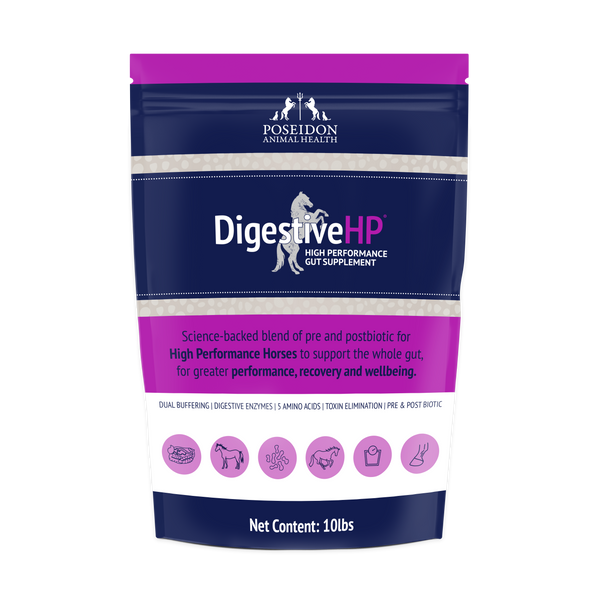
Support your horse's gut every day.
DigestiveHP is part of a complete feeding and management program. It does not treat or prevent colic and is not a replacement for veterinary care.
Shop DigestiveHPThe key message
Frequently asked questions
Does a horse need to roll to have colic?
No. Colic may begin with mild signs, such as eating less, becoming quiet or looking at the flank.
Can a horse still pass manure with colic?
Yes. Passing manure does not rule out colic. Call your vet if you notice other signs or are concerned.
Should I walk a horse with colic?
Follow your vet's advice. Gentle walking may keep a restless horse safer, but do not exhaust the horse or handler.
Can I give pain relief before the vet arrives?
Only give medication if your vet directs you to do so. Tell them about anything already given.
Does referral always mean surgery?
No. Referral allows further tests, close monitoring and intensive care. Surgery is only one possible treatment.
This article is educational and does not replace advice from the veterinarian responsible for an individual horse.