Posted by Erin Roddy
on August 28, 2026


Colic is one of the most worrying situations a horse owner can face. The word "colic" does not refer to a single disease. It is a broad term for abdominal pain caused by many different problems. Although not every case of colic can be prevented, consistent care can help reduce several recognized risk factors.
Some episodes of colic are mild and respond to medical care, while others are time-critical emergencies requiring referral or surgery. Recognizing that something is wrong and contacting your veterinarian early gives your horse the best opportunity for prompt assessment and appropriate treatment.
This guide explains the signs owners may notice, what to do while waiting for help, what the veterinary examination may involve, and the everyday management practices that can reduce several recognized risk factors.
Suspect colic? Call your veterinarian. Do not wait for the horse to begin rolling or for the signs to become severe. An owner cannot reliably determine the cause or seriousness of abdominal pain from behavior alone.
Colic at a glance
- Colic means abdominal pain; it is a sign rather than a single disease.
- Early signs can be subtle, including reduced appetite, quieter behavior or less manure.
- A horse does not need to be rolling to have colic.
- Call your veterinarian when colic is suspected, then follow their instructions.
- Do not give medication unless your veterinarian directs you to do so.
- Many cases can be managed medically, but some obstructions, displacements and strangulating lesions require urgent surgery.
- Consistent forage, water, movement, feeding routines and preventive healthcare can reduce risk, but no management program, feed or supplement can guarantee that colic will never occur.
What is colic in horses?
Colic is a general term used to describe abdominal pain. The pain most commonly arises from the gastrointestinal tract, but urinary, reproductive, muscular and other painful conditions can sometimes produce similar behavior.
This is why "colic" is not a complete diagnosis. A gas-filled section of intestine, a feed impaction, an inflammatory condition and a twisted intestine may all cause abdominal pain. Yet they differ greatly in urgency and treatment. The veterinarian's task is to assess the horse's overall condition, identify the most likely cause and determine whether the case can be managed on the property or requires referral.
The way a horse behaves provides useful information, but it does not reveal the exact diagnosis. Dramatic pain always warrants urgent attention. Yet, some serious conditions can initially produce only mild or intermittent signs.
Likewise, a horse may appear more comfortable after pain relief even though the underlying problem has not been resolved. The pattern over time and the horse's response to treatment are therefore important parts of the assessment.
Why are horses susceptible to colic?
The equine digestive tract is designed to process small, frequent amounts of fibrous feed. Several features also make horses vulnerable when normal flow, motility or fermentation is disrupted:
- Horses cannot vomit effectively. Fluid and gas accumulating in the stomach cannot be relieved in the usual way (like belching or vomiting) and may require urgent decompression through a nasogastric tube.
- The intestinal tract is long and complex. Contents must move through sections that differ in size, position and function.
- Natural narrowing points can impede flow. The pelvic flexure, for example, is a common location for large-colon impaction.
- Parts of the large colon are relatively mobile. This allows some sections to move from their normal position or twist.
- The hindgut depends on microbial fermentation. Abrupt feed changes and large starch-rich meals can disturb the environment in which those microbes function.
- Water and movement matter to normal gut function. Reduced drinking, limited movement and sudden management disruption can contribute to conditions associated with colic.
These features do not mean colic is inevitable. They explain why feeding, hydration, movement and routine deserve careful attention and why abdominal pain should never be dismissed.
What are the signs of colic?
Not every horse shows colic in the same way, and a horse rarely displays every recognized sign. Some become violently distressed; others are simply not themselves.
Knowing your horse's normal appetite, manure output, demeanor and resting behavior makes small deviations easier to notice. Owner research supports this emphasis: people often combine obvious behaviors with changes from the individual horse's normal pattern. Yet the decision to seek help is also shaped by previous experience and how severe the signs appear.

Early or subtle signs
- Reduced appetite or refusal to eat
- Eating more slowly or leaving part of a meal
- Reduced interest in people, companions or surroundings
- Being unusually quiet, dull or withdrawn
- Looking repeatedly at the flank
- Lying down more than usual or at an unusual time
- Stretching as though attempting to urinate
- A tense or unusual facial expression
- Reduced manure output
- A change in manure consistency
- An unusual stance or repeated shifting of weight
More obvious signs
- Pawing
- Repeatedly getting up and down
- Rolling or attempting to roll
- Kicking or biting at the abdomen
- Persistent pacing or agitation
- Sweating without an appropriate explanation
- Rapid breathing
- Abdominal distension
- Straining without producing manure
- Inability to settle or become comfortable
- Flehmen: lifting the lip
Passing manure does not completely rule out colic. Material already present beyond an obstruction may still be passed, and horses with gas, inflammation, displacement or early obstruction may continue to produce some manure.
Consider the whole horse rather than using any single sign as proof that everything is normal.
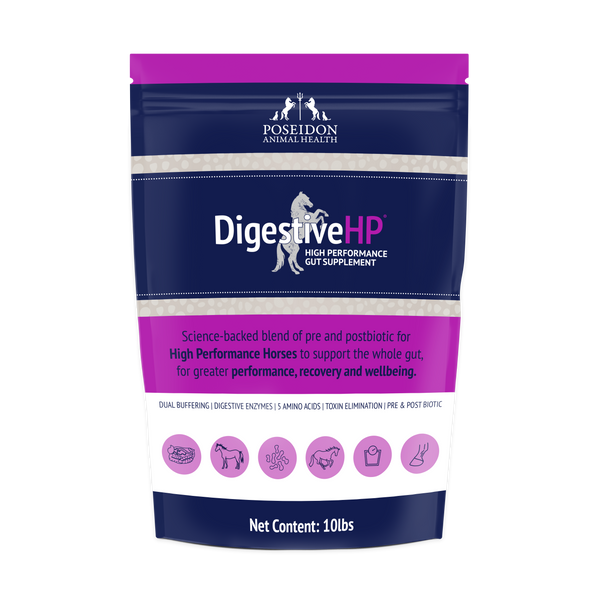
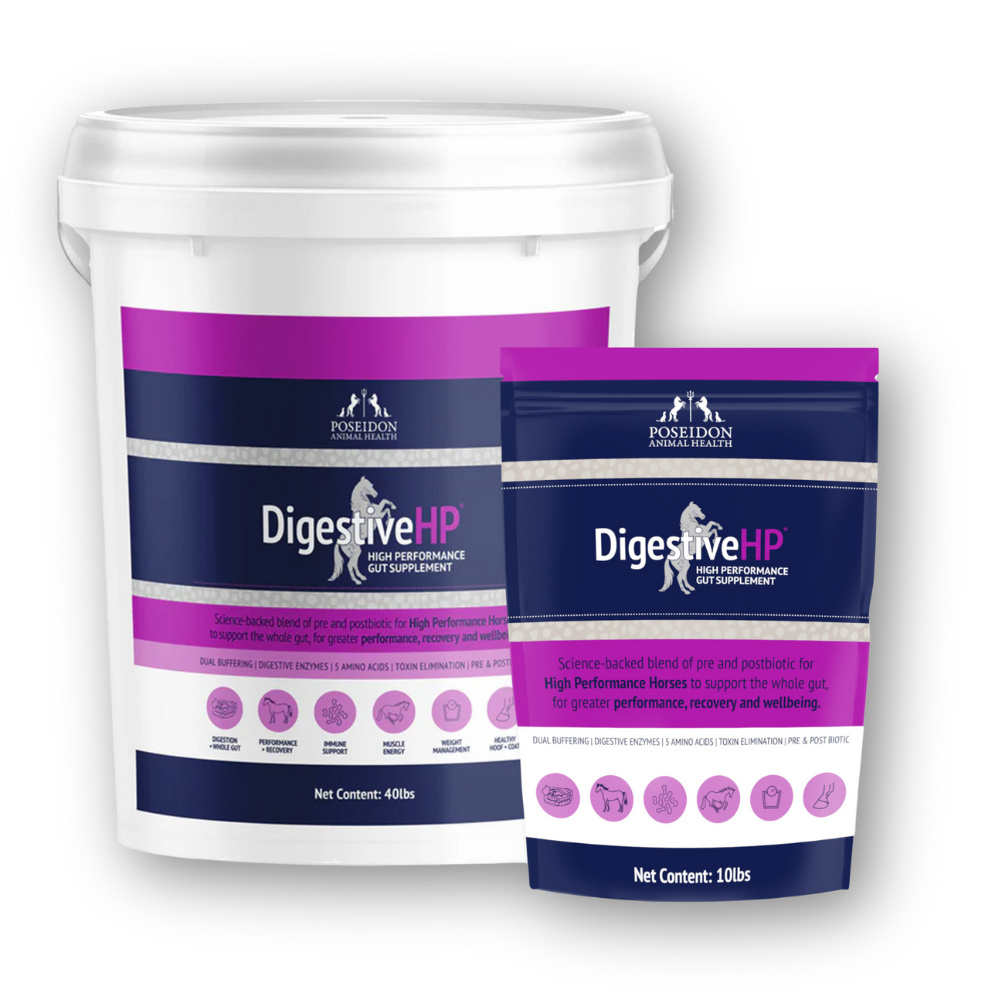
Support your horse's gut every day.
DigestiveHP is a daily gut-health supplement that supports digestion, condition and performance as part of a complete feeding and management program. It does not treat or prevent colic and is not a replacement for veterinary care.
Shop DigestiveHPWhen should you call the veterinarian?
Call when you suspect colic — not only when the signs become dramatic.
Early contact allows your veterinarian to ask targeted questions, advise you on immediate steps and decide how urgently the horse needs to be examined.
Research note
In a 2026 UK survey, 58% of 1,544 owners were unaware that irreversible intestinal damage can occur within four hours in some cases, illustrating why a "wait and see" approach can be risky when the underlying lesion is unknown.
Contact the veterinarian promptly if:
- Pain is persistent, recurring or becoming more intense.
- The horse is repeatedly lying down, rolling or difficult to keep safe.
- The horse is sweating, distressed or unable to become comfortable.
- Appetite, drinking or manure output has changed.
- The abdomen appears distended.
- The horse has a history of colic or abdominal surgery.
- The horse has recently traveled, foaled, changed feed or experienced illness.
- You are uncertain whether the behavior is normal.
Do not delay because the horse's signs appear mild. Serious conditions do not always begin with severe behavior, and delays can reduce the treatment options available if the intestine becomes damaged or its blood supply is compromised.
What should you do while waiting for the veterinarian?
Your veterinarian's directions take priority because the safest response depends on the individual horse, its behavior, the likely travel time and the clinical situation.
- Move the horse to a safe area. Choose a well-lit space with secure footing and remove objects that could cause injury. Protect yourself; a horse in severe pain may behave unpredictably.
- Remove access to feed unless advised otherwise. Prevent grazing and take away hay, grain and bedding the horse may eat. Follow your veterinarian's specific direction about water.
- Observe and take notes. Record when the signs began, whether they are continuous or intermittent, and whether they are becoming more severe.
- Check recent intake and output. Note the last time the horse ate, drank, urinated and passed manure, including any change in manure amount or consistency.
- Gather the history. Be ready to describe recent changes in feed, pasture, water, housing, exercise, travel, medications, dental care and parasite management.
- Check vital signs only if it is safe and familiar. Heart rate, respiratory rate, temperature and gum appearance can be useful, but do not endanger yourself or delay the call while trying to obtain them.
- Give no medication unless directed. Pain relief can alter the clinical picture, and some drugs may be inappropriate for a dehydrated or systemically unwell horse. Tell the veterinarian about anything already administered.
- Prepare for the examination. Arrange safe access, lighting, restraint assistance if requested, and transport options in case referral is recommended.
Should you walk a horse with colic?
Forced or prolonged walking is not automatically necessary. Gentle walking may help prevent an agitated horse from rolling or injuring itself while help is coming, but it should not exhaust the horse or handler. If the horse can stand quietly and safely, rest may be preferable.
Rolling is a sign of pain; it does not itself cause a twisted intestine. This misconception remains common and 69% of participants in a recent owner survey selected walking to prevent rolling. Among those who explained why, 41% believed rolling could cause a "twisted gut."
Follow your veterinarian's advice and never place yourself in danger trying to keep a violently painful horse moving.
What types of colic can occur?
Veterinarians group colic according to what is happening inside the horse's abdomen. Some types overlap, and the exact cause is not always confirmed when a horse recovers with medical treatment.
Gas or spasmodic colic
Gas can build up in the intestine and stretch the intestinal wall, causing pain. Changes in the normal movement of the gut can also cause cramping, known as spasmodic colic. Some cases improve with medical treatment, but more serious conditions can cause similar signs. Never assume that a horse "probably just has gas" or delay calling your veterinarian.
Impaction
An impaction occurs when feed, sand or other material forms a firm blockage in the intestine. It most commonly affects the large colon but can occur elsewhere. Possible contributing factors include reduced water intake, dry or poor-quality feed, dental problems, limited movement, sudden confinement and sand intake.
Simple obstruction
A simple obstruction occurs when something blocks the intestine, but the blood supply is not affected at first. It may be caused by an impaction, an enterolith (a stone that forms inside the intestine) or another physical blockage. Feed, gas and fluid can build up in front of the blockage, causing the intestine to stretch and become painful.
Displacement
A displacement occurs when part of the intestine moves out of its normal position. The bowel may become blocked, stretched or trapped. Some displacements of the large colon can be corrected with medical treatment, while others require surgery.
Strangulating obstruction
A strangulating obstruction occurs when the intestine is blocked and its blood supply is reduced or cut off. This may be caused by a twist, trapped intestine or certain fatty lumps called lipomas. Without a healthy blood supply, the affected intestine can become damaged quickly. This is a time-critical emergency that usually requires surgery. Severe or ongoing pain and worsening circulation are important warning signs, although not every surgical case follows the same pattern.
Inflammatory conditions
Inflammation of the small intestine, large intestine or abdominal lining can cause colic and make the horse seriously unwell. Depending on the condition, other signs may include fever, depression, diarrhea and dehydration. These horses may need intensive treatment with fluids and close monitoring. Inflammatory conditions can sometimes produce signs like an intestinal blockage.
Reduced intestinal motility
Ileus, also called reduced gut movement, occurs when the intestine slows greatly or stops moving. It may develop after abdominal surgery or as a result of severe illness, inflammation or another digestive problem. When the gut is not moving normally, gas and fluid can build up. Treatment may include removing fluid from the stomach, giving intravenous fluids and providing intensive care.
Horse owners cannot reliably tell these conditions apart by observing behavior alone. Veterinary assessment is essential because apparently mild signs can become more serious as the condition develops.
How will the veterinarian assess your horse?
Diagnosing colic is often a process rather than a single test that provides an immediate answer.
Your veterinarian will consider your horse's history, physical examination, test results and response to treatment. They may examine your horse several times because pain, hydration, circulation and the position and movement of the intestines can change as the condition develops.
Research note
In a study of 157 horses referred for colic, heart rate and measures of hydration and circulation were linked with whether horses recovered and returned home. This highlights why veterinarians check several signs repeatedly rather than relying on one reading.
The assessment may include:
- Pain and behavior: The veterinarian will consider how severe the pain is, whether it comes and goes, and how the horse responds to pain relief.
- Heart and respiratory rates: A high heart rate may be caused by pain, dehydration or poor circulation. It is considered alongside the other examination findings.
- Gums and capillary refill time: The color and moisture of the gums, and how quickly their color returns after gentle pressure, provide information about hydration and circulation.
- Temperature: A fever may suggest inflammation or infection, but a normal temperature does not rule out serious colic.
- Abdominal sounds: Increased, reduced or absent sounds help the veterinarian assess intestinal activity. Gut sounds alone cannot identify the cause of colic.
- Nasogastric intubation: A tube is passed through the nose and into the stomach to check for and remove built-up fluid or gas. Horses cannot vomit effectively, so releasing this pressure can be lifesaving.
- Rectal examination: When it is safe to do so, the veterinarian may examine the horse internally through the rectum. This can help them assess the position, size and contents of parts of the intestine.
- Ultrasonography: An ultrasound examination may show stretched or enlarged intestine, reduced gut movement, changes in the intestinal wall or unusual fluid in the abdomen.
- Blood tests and abdominal fluid: In some cases, these tests help assess hydration, inflammation, circulation and possible damage to the intestine.
One normal finding does not guarantee that a horse is safe. The veterinarian will consider all the findings together and monitor how they change over time when deciding on treatment or hospital care.
How is colic treated?
Treatment depends on the suspected cause, the severity of the pain, the horse's hydration and circulation, and whether the intestine may be blocked or damaged.
Treatment without surgery may include:
- Pain relief and sedation
- Removing gas or fluid from the stomach through a nasogastric tube
- Giving fluids by mouth or into a vein
- Giving laxatives or other treatments through a nasogastric tube when appropriate
- Treating inflammation, endotoxemia or another identified condition
- Temporarily withholding feed and carefully reintroducing it
- Repeating examinations and monitoring the horse closely
Many uncomplicated cases improve with treatment on the property. Other horses need the advanced tests, continuous monitoring, fluid therapy and surgical facilities available at an equine hospital.
Your veterinarian may recommend transporting your horse to an equine hospital if:
- Pain continues or returns
- A large amount of fluid builds up in the stomach
- Circulation worsens
- An intestinal blockage or displacement is suspected
- The diagnosis remains uncertain
- The horse needs intensive monitoring, advanced tests or treatment that cannot be provided on the property
Research note
Being sent to an equine hospital does not necessarily mean your horse will need surgery. In one survey, one in four owners believed that hospital referral meant surgery was required.
Transporting your horse while they are still stable allows the hospital team to carry out further tests, monitor them closely and provide treatment. If surgery is needed, earlier treatment generally gives the horse a better chance of recovery than waiting until they become seriously unwell.
When might colic surgery be necessary?
Surgery is most likely to be considered when there is:
- Persistent or uncontrollable pain
- Pain that returns repeatedly after analgesia
- Suspected strangulation or compromised intestinal blood supply
- A mechanical obstruction that cannot be corrected medically
- Certain displacements or twists
- Progressive abdominal distension or gastric reflux
- Worsening cardiovascular status
- Failure to respond to appropriate medical treatment
The decision is based on the whole clinical picture rather than one finding. Some horses requiring surgery show severe pain; others initially display only moderate or intermittent discomfort.
Colic surgery has improved greatly, but there is no single survival rate that applies to every horse. The chance of recovery depends on the type of colic, how unwell the horse is when they arrive at the hospital and whether damaged intestines need to be removed.
Survival figures also vary depending on whether they measure horses recovering from anesthesia, leaving the hospital or remaining well over the longer term. A review of 50 years of colic surgery found that results can be difficult to compare because hospitals and studies may include different types of cases and measure survival in different ways. Your veterinary team can provide the most relevant outlook for your individual horse.
Research note
In an Italian study of 451 horses that underwent colic surgery, about 69% survived to leave the hospital. When researchers counted only the 386 horses that recovered from anesthesia, the survival rate to discharge was 80%. In a separate US study of 71 horses that had left the hospital, about 86% were still alive one year later, and 72% of those one-year survivors were athletically active. These results are encouraging, but they describe groups of horses and cannot predict the outcome for an individual horse.
What happens after colic?
Recovery instructions must reflect the cause of the colic and the treatment given. Do not resume the horse's usual ration or workload simply because it appears brighter.
After medically managed colic
- Follow the veterinarian's individual refeeding instructions.
- Reintroduce forage, water, turnout and exercise as directed.
- Give only prescribed treatments at the stated dose and frequency.
- Monitor appetite, drinking, manure output and comfort.
- Record any return of pain or unusual behavior.
- Call promptly if signs recur.
- Complete recommended dental, parasite, dietary or diagnostic follow-up.
- Review possible management contributors without assuming one factor caused the episode.
After colic surgery
- Follow the hospital's wound-care, medication and refeeding plan.
- Monitor temperature, appetite, manure production and the incision as instructed.
- Report pain, fever, swelling, discharge, reduced appetite or other concerning changes promptly.
- Follow controlled-exercise and turnout restrictions.
- Attend scheduled rechecks.
- Reintroduce work gradually after veterinary clearance.
Recovery is also an opportunity to create a written baseline: what the horse normally eats and drinks, typical manure output, usual vital signs and any patterns surrounding the episode. That record can make future changes easier to identify.
Problems can sometimes develop after colic surgery. These may include fever, wound complications, colic returning, a slow-moving gut, fluid building up in the stomach, diarrhea, inflammation of a vein or laminitis. The risk varies depending on the cause of the colic, the surgery performed and the individual horse. This is why careful monitoring at the hospital and clear instructions for recovery at home are so important.
Which horses may need closer monitoring?
Any horse can develop colic, but closer observation is sensible when recognized risk factors or major management disruptions are present. These include:
- Previous colic or abdominal surgery
- Recent gastrointestinal illness
- Dental disease or impaired chewing
- A recent change in feed, forage, pasture, water, housing or exercise
- High concentrate intake or inconsistent access to forage
- Reduced drinking or unreliable water access
- Sudden confinement, reduced turnout or abrupt exercise changes
- Frequent or long-distance travel
- Sand or soil exposure
- Inadequate or non-targeted parasite management
- Conditions associated with age
- Recent foaling or other major physiological stress
Having one or more risk factors does not mean a horse will develop colic. They simply highlight times when consistent care, veterinary advice and watching closely for early signs are especially important. Risk factors are warning clues, not a diagnosis. They may also reflect wider changes in feed, turnout or daily routine, and research findings can vary between regions and studies.
Reducing digestive disruption during travel
Travel can expose horses to several stressors at once, including changes in feed and water, confinement, heat, unfamiliar surroundings and disruption to their usual routine.
Research note
One study found that 10–12 hours of commercial road transport temporarily slowed the movement of food through the gut. This effect was greater in hotter conditions and in horses showing stronger signs of stress.
Because every journey and horse is different, there is no single feeding and watering plan that suits all situations. Before traveling, discuss the best approach with your veterinarian and transporter.
Before departure
- Preserve familiar forage, feed and feeding times where practical.
- Avoid introducing a new feed immediately before travel.
- Confirm normal appetite, drinking, manure and demeanor.
- Pack familiar forage and, where feasible, familiar water.
- Plan the route, environmental conditions and safe monitoring opportunities.
- Identify veterinary services near the destination.
During travel
- Follow an appropriate watering and feeding plan for the journey length and conditions.
- Avoid unnecessary prolonged forage gaps while balancing individual veterinary advice.
- Monitor the horse whenever it is safe to do so.
- Manage ventilation and heat exposure carefully.
- Use safe, suitable rest arrangements for longer journeys.
After arrival
- Re-establish familiar feeding and turnout routines gradually.
- Monitor appetite, drinking, manure, temperature and comfort.
- Watch for diarrhea, fever or respiratory signs as well as abdominal pain.
- Seek veterinary advice if the horse is dull, not eating or drinking normally, producing less manure or showing other concerning signs.
How can owners reduce the risk of colic?
Not every case of colic can be avoided, and a colic episode does not automatically mean the owner did something wrong. The practical goal is to reduce modifiable risks and make departures from normal easier to detect.
Research note
Two studies of horses treated by private veterinarians in Texas found that recent changes in feed and hay were linked with a higher risk of colic. In one study, horses given a new batch of hay had nearly five times the odds of experiencing colic. Horses with no access to pasture, or whose pasture access had recently been reduced, had three times the odds of experiencing colic.
These figures do not predict whether an individual horse will develop colic. However, they highlight the importance of making feeding changes gradually and monitoring horses closely whenever their hay source, batch, quality or intake changes.
1. Make appropriate forage the foundation
Provide consistent access to suitable, good-quality forage and avoid leaving horses without forage for long periods where possible. Choose forage that suits your horse's health, body condition and workload. Do not feed forage that looks, smells or feels unusual.
2. Make dietary changes gradually
Introduce new forage, pasture and concentrate feeds in measured steps over a period of 14 days. Be mindful, a change of hay batch can be a meaningful diet change even when the feed label or forage type has not changed. Where practical, blend the old and new forage during the transition, inspect the new batch for quality and consistency, and monitor appetite, water intake and manure. Avoid sudden increases in grain or large starch-rich meals; divide necessary concentrate into appropriately sized feeds.
3. Protect water access and monitor drinking
Provide clean, palatable water and check that buckets, troughs and automatic systems are working. Observe how much the horse actually drinks, particularly during cold weather, heat, travel, illness and feed changes.
4. Encourage regular movement
Turnout and appropriate exercise support normal behavior and gastrointestinal function. Change workload, turnout and confinement gradually where possible, and develop a specific management plan with the veterinarian for horses requiring box rest.
5. Maintain dental care
Poor chewing can reduce feed particle breakdown and may contribute to digestive problems. Schedule oral examinations at intervals recommended for the individual horse, especially when there is quidding, weight loss, slow eating or difficulty chewing.
6. Use evidence-informed parasite management
Work with the veterinarian to develop a targeted program based on factors such as age, management, local parasite patterns and fecal egg counts. Routine treatment without assessment can promote resistance and may not address the horse's actual risk.
7. Reduce sand and foreign-material ingestion
Avoid feeding directly from sandy ground, maintain pasture cover where possible and use feeders or mats appropriate to the setting. Horses with meaningful sand exposure may need veterinary assessment and a property-specific plan.
8. Monitor patterns, not isolated snapshots
Track appetite, water intake, manure, body condition and behavior. Investigate recurrent mild colic, repeated appetite changes, unexplained weight loss or persistent manure changes rather than repeatedly masking the signs.
9. Plan for disruption
Prepare feeding, watering and monitoring strategies before travel, competitions, seasonal transitions, relocation, foaling or enforced confinement. Preserving familiar routines can be as important as choosing individual feeds.
The key is consistency. Keeping your horse's feed, water, turnout and daily routine as steady as possible can help reduce digestive upsets.
Where do digestive supplements fit?
Good feeding and management are the foundation of digestive health. This includes providing plenty of suitable forage and fresh water, making feed changes gradually, maintaining dental care and seeking veterinary advice when a horse is unwell.
DigestiveHP can provide additional nutritional support as part of this daily program, depending on the horse's diet, workload and individual needs.
Travel can disrupt a horse's normal feeding, drinking and routine. Stress Paste may provide additional nutritional support before and during travel or at other times of short-term stress. However, it should be used alongside careful journey planning, suitable access to feed and water, and veterinary advice where needed.
Supplements cannot correct poor-quality forage, dehydration, sudden feed changes, dental problems or an unresolved health issue. DigestiveHP and Stress Paste do not treat or prevent colic and are not a replacement for veterinary care.
When choosing a digestive supplement, consider:
- What the product is designed to support
- Its ingredients and recommended daily amount
- Whether it suits your horse's diet and individual needs
- The manufacturer's quality controls
- The evidence supporting its claims
Choose a product as part of a complete review of your horse's feeding and management — not as a substitute for one.
Frequently asked questions about horse colic
Can a horse pass manure while experiencing colic?
Yes. A horse may pass material that was already beyond an obstruction, and several types of colic do not completely stop manure production. Passing manure is useful information, but it does not prove the problem has been resolved.
Can a horse have colic without rolling?
Yes. Reduced appetite, quiet behavior, flank watching, repeated lying down or less manure may be the only early signs. Some serious conditions initially appear subtle.
What is the most common type of colic?
Gas, spasmodic and impaction-type presentations are commonly encountered, but prevalence varies with population, region, management and how cases are classified. The most important point for an owner is that behavior alone cannot establish the type.
How quickly should I call the veterinarian?
Call when colic is suspected. The veterinarian can help you decide the next step based on the horse's signs, history and location. Do not wait for severe pain.
Should I walk a horse with colic?
Only when it is safe and useful. Gentle walking may help manage a restless horse while waiting, but prolonged forced walking can exhaust the horse and handler. A horse standing quietly may be allowed to rest if the veterinarian agrees.
Should a horse with colic eat or drink?
Remove feed while seeking veterinary advice unless directed otherwise. Ask the veterinarian specifically about water, because advice may depend on the individual case and expected examination time.
Does every horse with colic need surgery?
No. Many cases respond to medical treatment. Surgery is considered when findings suggest a mechanical obstruction, displacement, strangulation or another condition unlikely to resolve medically, or when pain and clinical status are worsening.
Can weather changes increase colic risk?
Weather may alter water intake, forage, pasture access, movement and routine. These associated management effects are more useful to monitor than assuming the weather alone caused an episode.
Does traveling increase colic risk?
Travel is associated with digestive disruption in some horses and can reduce intestinal motility, particularly during long or hot journeys. Planning familiar feed and forage, hydration, ventilation, monitoring and post-arrival routine can help manage the risk.
Can colic be prevented?
No program can prevent every case. Consistent forage, clean water, gradual changes, regular movement, dental care, targeted parasite control and early investigation of abnormalities can reduce several recognized risks.
Is a horse more likely to experience colic again after one episode?
A history of colic has been associated with increased risk in several observational studies, but the individual risk depends on the original cause and ongoing health and management. Ask the veterinarian whether follow-up investigation or specific adjustments are warranted.
How should a horse be fed after colic?
Follow the individual refeeding plan provided by the treating veterinarian or hospital. The appropriate timing, forage and meal size depend on the suspected cause, treatment and recovery.
References and further reading
- American Association of Equine Practitioners. 10 Tips for Preventing Colic. 2021. aaep.org
- Moore JN. Colic in Horses. Merck Veterinary Manual, Horse Owners. Updated May 2026. merckvetmanual.com
- Moore JN. Overview of Colic in Horses. Merck Veterinary Manual, Professional Version. merckvetmanual.com
- Curtis L, Burford JH, Thomas JSM, et al. Risk factors for acute abdominal pain (colic) in the adult horse. PLOS ONE. 2019;14(7):e0219307. doi.org
- Raidal SL, et al. Road transportation is associated with decreased intestinal motility in horses. Frontiers in Veterinary Science. 2025;12:1647236. doi.org
- Cohen ND, Gibbs PG, Woods AM. Dietary and other management factors associated with colic in horses. Journal of the American Veterinary Medical Association. 1999;215(1):53–60.
- Hudson JM, Cohen ND, Gibbs PG, Thompson JA. Feeding practices associated with colic in horses. Journal of the American Veterinary Medical Association. 2001;219(10):1419–1425.
- Scantlebury CE, Perkins E, Pinchbeck GL, Archer DC, Christley RM. Could it be colic? Horse-owner decision making and practices in response to equine colic. BMC Veterinary Research. 2014;10(Suppl 1):S1. doi.org
- Freeman DE. Fifty years of colic surgery. Equine Veterinary Journal. 2018;50(4):423–435. doi.org
- Mair TS, Smith LJ. Survival and complication rates in 300 horses undergoing surgical treatment of colic. Part 1. Equine Veterinary Journal. 2005;37(4):296–302. doi.org
- Stratico P, Varasano V, Palozzo A, et al. Retrospective study on risk factors and short-term outcome of horses referred for colic from 2016 to 2022. Veterinary Sciences. 2022;9(10):545. doi.org
- Spadari A, Gialletti R, Gandini M, et al. Short-term survival and postoperative complications rates in horses undergoing colic surgery. Animals. 2023;13(6):1107. doi.org
- Matthews LB, Sanz M, Sellon DC. Long-term outcome after colic surgery: retrospective study of 106 horses in the USA (2014–2021). Frontiers in Veterinary Science. 2023;10:1235198. doi.org
- Burrell KL, England GCW, Burford JH, Freeman SL. Impact of evidence-based information on horse owners' misconceptions of colic. Equine Veterinary Journal. 2026; advance online publication. doi.org